
Motivating employees is no longer just a management function—it’s a strategic necessity. In today’s competitive club industry, where service quality and member satisfaction are directly linked to employee performance, understanding what drives individual team members is more critical than ever. Motivation is deeply personal, shaped by one’s life circumstances, environment, and expectations. It is also dynamic, influenced by changes in professional and personal contexts. But what exactly is motivation, and how can leaders in the club industry effectively harness it?
In the fast-paced world of club management, where member satisfaction and service quality are everything, one thing is clear: motivated employees make all the difference.
But what truly motivates people today? And how can club leaders tap into that to create a high-performing, happy team?
Let’s dive into how motivation works—and how you can use it to energise your people and elevate your club.
Understanding Motivation
As Nelson Mandela said, “It always seems impossible until it is done.”
Motivation is more than just enthusiasm—it’s about having a goal, believing you can reach it, and having the drive to make it happen.
In club management, the best kind of motivation comes when your staff want to do the work, not because they have to, but because they see the value in it for themselves.
At its core, motivation is the drive to achieve a goal, powered by energy and persistence. It can be framed as:
Motivation = Value of Outcome × Expectation of Achieving It
This formula highlights two key components: the perceived value of a goal and the belief in one’s ability to reach it. Motivation isn’t just about pushing people to perform—it’s about aligning their personal ambitions with organizational goals. In club management, this means getting people to do what you want because they want to do it.
Motivated employees bring numerous benefits. They’re more productive, creative, and committed. They stay longer, work harder, and are more likely to innovate and inspire others. Simply put, motivated people make clubs successful.
What Motivates Employees Today?
Great question—and one that’s been studied for centuries.
From Adam Smith’s 18th-century analysis of factory productivity, the study of motivation has evolved significantly. Recent surveys, such as those conducted by Deloitte and McKinsey & Company, continue to shed light on what employees today value most.
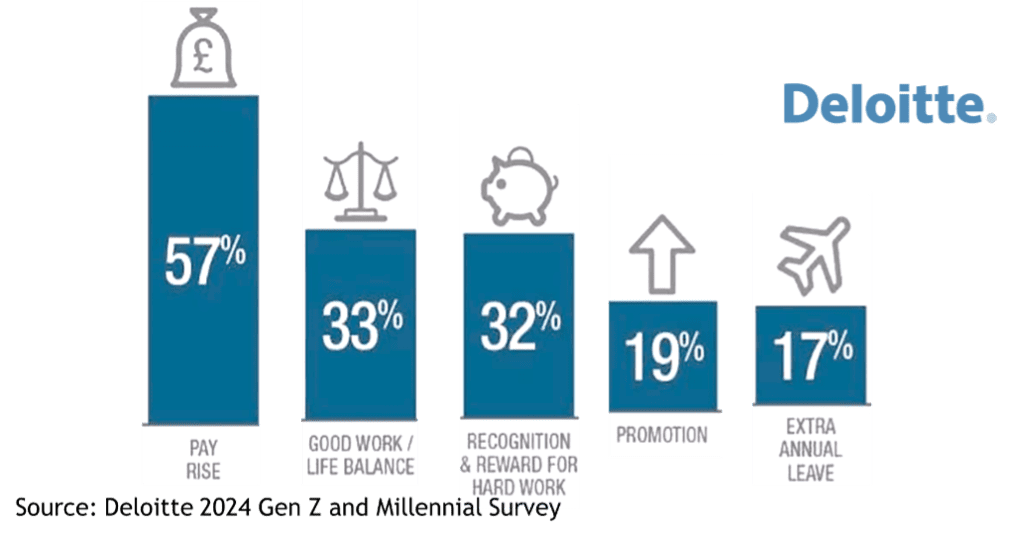
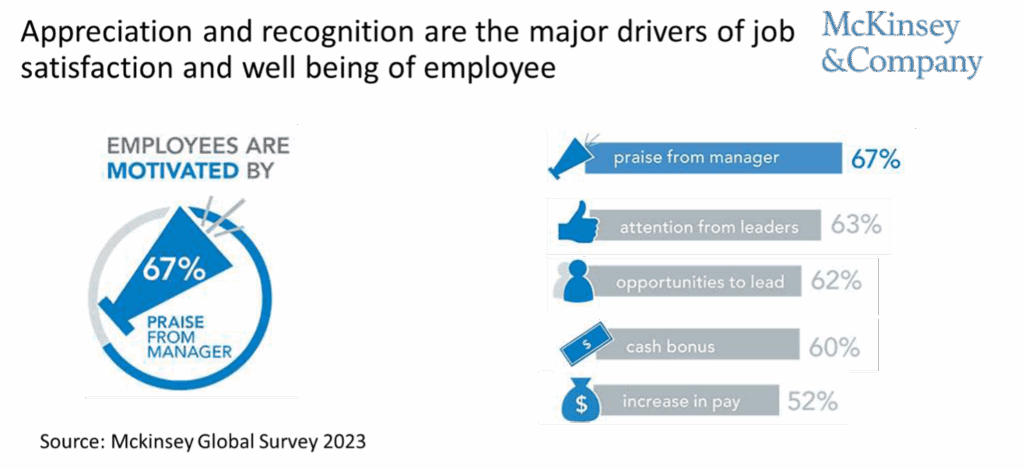
Among the findings, some modern-day motivators include:
- Praise from the manager
- A sense of purpose and meaningful work
- Opportunities for growth and development
- Recognition and appreciation
- Autonomy and flexibility
- Fair compensation
But perhaps the most powerful question an employee asks is: “What’s In It For Me?” (WIFM). This concept reminds leaders that motivation is ultimately about individual gain—whether that’s financial reward, career advancement, emotional satisfaction, or personal recognition.
Why Motivated Employees Matter
If you’re still wondering whether motivation is worth investing in, here’s what it can do for your club:
- Boosts energy and performance
- Improves work quality
- Sparks creativity and innovation
- Reduces staff turnover
- Attracts top talent
- Drives productivity—because happy people really do produce more!
Theories That Help Make Sense of It All
Several psychological and organizational theories help decode what drives human behaviour in the workplace. Some of the most influential include:
1. Maslow’s Hierarchy of Needs
Maslow proposed that humans are motivated by five levels of needs: physiological, safety, social belonging, self-esteem, and self-actualisation. In the club industry, this might translate to ensuring staff have secure contracts (safety), a supportive team (social), recognition programs (esteem), and opportunities for advancement (self-actualisation).
2. Alderfer’s ERG Theory
An evolution of Maslow’s work, ERG theory simplifies motivation into three categories: Existence (basic needs), Relatedness (interpersonal connections), and Growth (personal development). Unlike Maslow, ERG allows for multiple needs to be pursued simultaneously.
3. Herzberg’s Two-Factor Theory
This theory divides workplace factors into “hygiene factors” (which prevent dissatisfaction) and “motivators” (which actively drive satisfaction). For example, salary and work conditions are hygiene factors, while recognition and career growth are motivators.
4. McClelland’s Theory of Needs
McClelland identified three key motivators: achievement, affiliation, and power. Club managers can use this model to understand what drives individual employees and tailor their approach accordingly.
5. Vroom’s Expectancy Theory
One of the more practical models for management, Vroom’s theory argues that motivation is a function of three beliefs:
- Expectancy: Will my effort lead to success?
- Instrumentality: Will success lead to a reward?
- Valence: Do I value the reward?
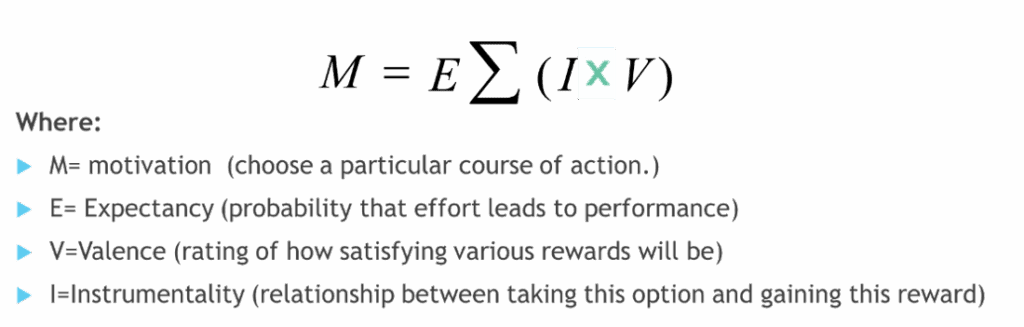
This framework is especially useful for managers designing incentive programs, as it underscores the importance of linking effort to meaningful outcomes.
Moving Forward
So, what’s next for club managers looking to boost motivation? The answer lies in a tailored approach—one that understands individual drivers and aligns them with the club’s mission. No single strategy works for all, but combining theory with practical insights can create a workplace where employees feel valued and inspired.
Let’s Work Together
I offer custom-designed workshops to help clubs build motivated, high-performing teams using my “5D” Method:
- Define
- Design
- Develop
- Deliver
- All powered by Darshan’s signature style—personal, practical, and proven.

Interested? Let’s talk.
Email me at Darshan@mtiworldwide.com
Senior HRM Consultant, MTI Consulting (Bahrain)
If you found this useful, share it with a colleague or follow for more insights on people, performance, and leadership in the hospitality and club industry.